
Emotional Flashbacks in Complex PTSD: What They Are and How ACT Helps
This post is for adults trying to make sense of intense emotional reactions that arrive suddenly and feel disconnected from the present situation. If you live with Complex PTSD symptoms, or wonder whether this framework fits your experience, there are clinical ways to understand what is happening and approaches that may help. This page covers what emotional flashbacks are, how they differ from panic attacks and classic PTSD flashbacks, what triggers them in daily life and relationships, and how ACT can support a different response when they arrive.
Quick Answer
Emotional flashbacks are sudden, intense surges of shame, fear, or helplessness that re-create the emotional experience of past trauma in the present moment, often without a clear visual memory attached.
They are not a formal diagnosis. Emotional flashbacks are a clinical framework term for experiences that map onto recognized ICD-11 Complex PTSD symptom domains, particularly re-experiencing in the present and affect dysregulation (Maercker et al., 2022).
Emotional flashbacks have not been measured as a separate symptom in population studies. In a nationally representative U.S. sample of approximately 1,800 adults, an estimated 3.8% met probable criteria for ICD-11 Complex PTSD based on self-report using the International Trauma Questionnaire (Cloitre et al., 2019).
I provide ACT-led telehealth therapy for adults in California and Virginia, with limited in-person sessions available in Folsom.
If you are in crisis in the United States, please call or text 988 for support.
Key Takeaways
"Emotional flashback" is a clinical framework term, not a formal ICD-11 or DSM-5-TR diagnosis. It maps onto re-experiencing and affect dysregulation in Complex PTSD (Maercker et al., 2022).
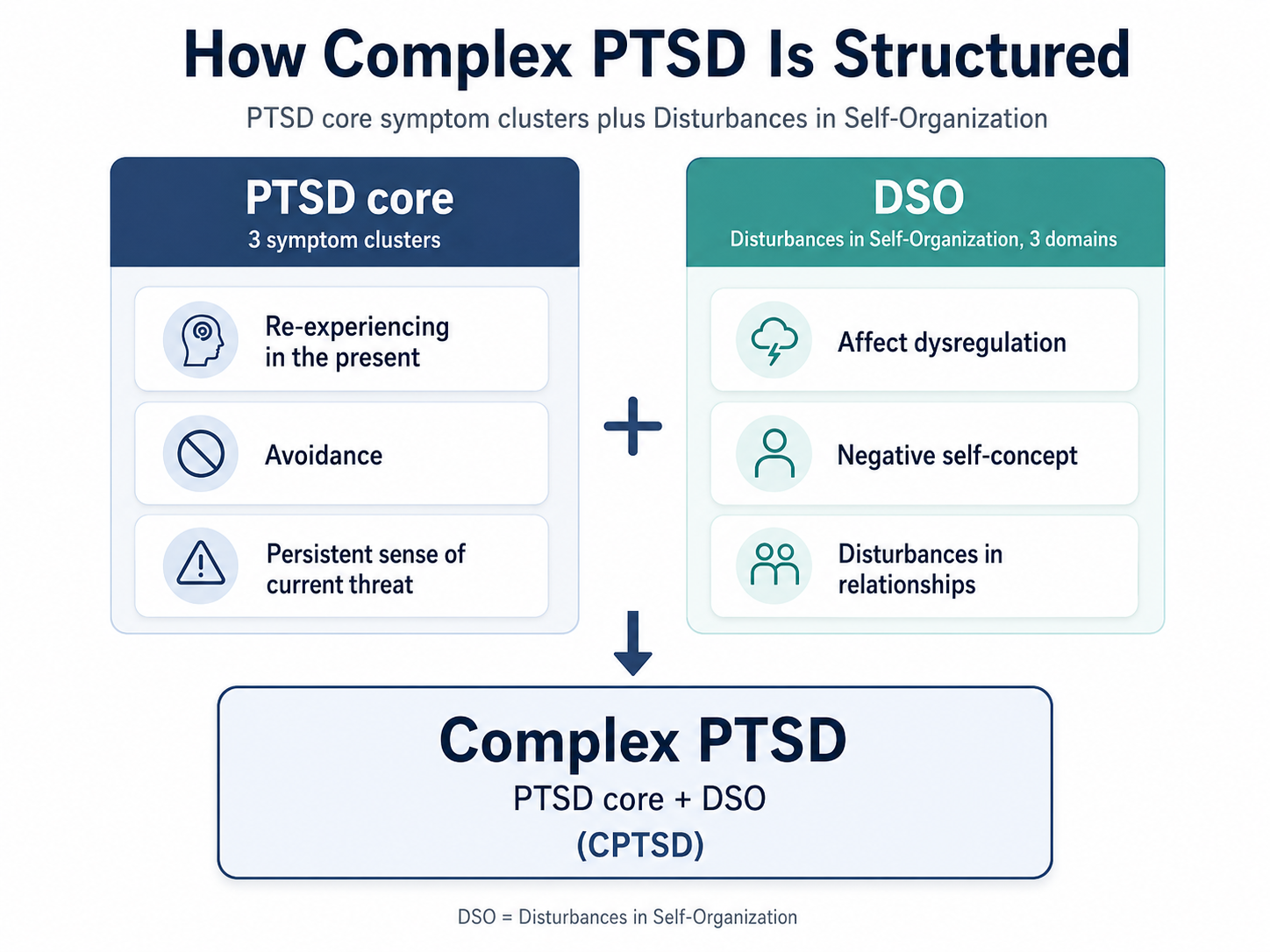
ICD-11 CPTSD requires the three PTSD symptom clusters plus Disturbances in Self-Organization (DSO): affect dysregulation, negative self-concept, and relational disturbances (Maercker et al., 2022).
Shame has a stronger association with DSO symptoms than with core PTSD symptoms, which helps explain why emotional flashbacks often feel shame-dominant (Oasi et al., 2025).
Affect dysregulation includes both hyperactivation (flooding, anger, reactivity) and hypoactivation (numbing, shutdown, detachment) (Karatzias et al., 2018).
Emotional flashbacks tend to differ from panic attacks and classic PTSD flashbacks in their primary emotional content, trigger patterns, and relationship to self-concept (American Psychiatric Association, 2022; Maercker et al., 2022).
ACT has promising evidence for trauma-related symptoms. Direct ICD-11 CPTSD and emotional flashback-specific evidence is still developing (Rowe-Johnson et al., 2025).

Photo by cottonbro studio via Pexels
What Is Complex PTSD, and How Do Emotional Flashbacks Fit In?
Complex PTSD is an ICD-11 diagnosis that applies when a person meets full criteria for PTSD and also experiences persistent disturbances across three additional domains that affect how they relate to their emotions, themselves, and other people (Maercker et al., 2022).
It is recognized in ICD-11 under code 6B41 and is distinct from PTSD, which appears under code 6B40. Both diagnoses are recognized by the World Health Organization and are assessed using validated tools such as the International Trauma Questionnaire (Cloitre et al., 2018). The American Psychiatric Association's DSM-5-TR does not include a separate Complex PTSD diagnosis, though many of the symptom patterns it describes are addressed within PTSD specifiers and related conditions (American Psychiatric Association, 2022).
The Three Core PTSD Symptom Clusters
ICD-11 PTSD requires the presence of three symptom clusters, all of which carry forward into a CPTSD diagnosis (Maercker et al., 2022; Brewin et al., 2017).
Re-experiencing in the present. The person relives aspects of the traumatic event as though it is happening now, through intrusive memories, flashbacks, or nightmares that carry a vivid here-and-now quality. This is distinct from simply remembering or thinking about a traumatic event; it involves a felt sense of present-moment threat.
Avoidance. The person consistently avoids internal reminders such as thoughts, feelings, or bodily sensations, or external reminders such as people, places, or situations that are associated with the traumatic experience (Brewin et al., 2017).
Persistent sense of current threat. The person experiences a heightened, ongoing sense of danger that is out of proportion to present circumstances, which can include hypervigilance, exaggerated startle responses, and difficulty returning to a baseline state of calm (Maercker et al., 2022).
The Three Disturbances in Self-Organization (DSO)
CPTSD requires all three PTSD clusters above, plus persistent disturbances in self-organization across three additional domains (Maercker et al., 2022; Karatzias et al., 2018).
Affect dysregulation. The person has severe and persistent difficulty managing emotional responses. This can involve emotional hyperactivation, such as intense reactivity, flooding, or rapid escalation, or hypoactivation, such as emotional numbness, detachment, or shutdown (Karatzias et al., 2018).
Negative self-concept. The person holds entrenched beliefs about themselves as defective, worthless, damaged, or deserving of harm. Deep shame and guilt related to the trauma are central features of this cluster (Maercker et al., 2022).
Disturbances in relationships. The person experiences persistent difficulty sustaining close relationships, feeling connected to others, or trusting people in ways that feel safe. This often includes a chronic sense of distance or disconnection in interpersonal contexts (Cloitre et al., 2019).
Large-scale validation studies using the International Trauma Questionnaire confirm that the PTSD and DSO factors are related but statistically distinct, meaning CPTSD represents a broader and more complex pattern than PTSD alone (Cloitre et al., 2018; Brewin et al., 2017).
How Emotional Flashbacks Fit Into This Picture
Emotional flashbacks are not a formal ICD-11 symptom label, but the experiences they describe sit directly at the intersection of CPTSD's re-experiencing and DSO clusters (Maercker et al., 2022).
When a person with CPTSD encounters a cue connected to past trauma, particularly a relational or emotional cue, they may suddenly re-experience the emotional state of that earlier experience in full. This is not a visual replay of events. It is an affective reliving: the shame, helplessness, abandonment fear, or dread that belonged to the past becomes active in the body and emotional system as though it is happening now (Brewin et al., 2017).
The affect dysregulation cluster explains why the onset is rapid and the intensity is disproportionate to the present trigger. The negative self-concept cluster explains why shame and self-attack are often the dominant emotional content during these episodes (Maercker et al., 2022). The re-experiencing cluster explains the here-and-now quality that distinguishes an emotional flashback from ordinary emotional distress.
Understanding this structure matters clinically because it shapes what kind of support is most useful. Treatment approaches for CPTSD prioritize affect regulation, shame-focused work, and relational safety as foundational elements, particularly before or alongside any trauma processing (Cloitre et al., 2021).
What Are Emotional Flashbacks?
Emotional flashbacks are sudden, intense states in which a person re-experiences the emotional reality of a past traumatic experience in the present moment, typically without an accompanying visual memory or narrative replay of events (Maercker et al., 2022).
The term was popularized in clinical and psychoeducational discourse by authors such as Pete Walker (2013), who described the pattern in adults with complex trauma histories. It is not a formal ICD-11 or DSM-5-TR symptom label. It functions as a psychoeducational and clinical framework term that maps onto recognized CPTSD symptom domains, particularly re-experiencing in the present and affect dysregulation (Maercker et al., 2022; Hyland et al., 2023).
What Distinguishes an Emotional Flashback From Ordinary Emotional Distress
Ordinary emotional distress is generally proportionate to a present situation and resolves when that situation changes. An emotional flashback is not. It carries a here-and-now quality, meaning the emotional experience feels current rather than remembered, and its intensity is typically out of proportion to the present trigger (Maercker et al., 2022).
Several features distinguish emotional flashbacks from standard emotional responses.
Affect is primary. The dominant experience is emotional, not visual or narrative. A person may feel overwhelming shame, fear, helplessness, abandonment, or dread without any accompanying image or story from the past (Hyland et al., 2023).
Self-concept shifts. During an emotional flashback, a person often experiences a sudden regression in their felt sense of self. They may feel small, powerless, defective, or as though they have done something unforgivable, consistent with activation of the negative self-concept cluster in CPTSD (Maercker et al., 2022).
Onset is rapid and often cue-driven. Emotional flashbacks are typically triggered by interpersonal or emotional cues that carry similarity to the original traumatic environment, though the person may not consciously recognize the connection at the time (Hyland et al., 2023).
Duration varies. An emotional flashback can last minutes or hours. The acute affective surge may be followed by a period of shame, exhaustion, or emotional shutdown, consistent with the hypoactivation pole of affect dysregulation (Karatzias et al., 2018).
The Two Affective Poles of Emotional Flashbacks
Research on affect dysregulation in CPTSD identifies two distinct patterns that can characterize emotional flashback states (Karatzias et al., 2018).
Hyperactivation. The person experiences sudden emotional flooding, intense reactivity, overwhelming shame or fear, or rapid escalation of distress. The emotional experience feels urgent, consuming, and difficult to contain.
Hypoactivation. The person experiences emotional numbness, detachment, dissociative shutdown, or a felt collapse of energy and responsiveness. Rather than flooding, the system moves toward disconnection or flatness.
These two poles are empirically distinct dimensions of affect dysregulation in CPTSD rather than a single uniform pattern (Karatzias et al., 2018). A person may experience predominantly one pattern, or may move between them across different episodes.
Why Emotional Flashbacks Occur Without Visual Memory
The absence of visual or narrative memory in emotional flashbacks is consistent with theories of how traumatic experience may be encoded and stored, particularly when trauma is chronic, relational, or occurred in early developmental periods (Hyland et al., 2023).
The ICD-11 re-experiencing criterion specifies reliving in the present, which can occur through intrusive memories, flashbacks, or other forms of present-moment affective activation (Maercker et al., 2022). When trauma occurs before autobiographical memory systems are fully developed, or when it is encoded primarily at the level of affect and body state rather than narrative, the re-experiencing that emerges may carry full emotional intensity without any retrievable visual or verbal content (Hyland et al., 2023).
This distinction is clinically important because it means the absence of a clear memory does not indicate the absence of a trauma response. It means the response is organized differently (Brewin et al., 2017).
Why the Term Matters Clinically
Using the term emotional flashback in a clinical or psychoeducational context helps people recognize a pattern that previously had no name and may have been misinterpreted as a character flaw, emotional instability, or overreaction (Maercker et al., 2022).
Naming the experience as a trauma response, rather than a personality problem, can be clinically helpful. It shifts the interpretive frame from "something is wrong with me" toward "this is a learned and recognizable response to what happened to me." That reframe is foundational to the values-based recovery work central to ACT (Hayes et al., 2012).
For people with CPTSD, psychoeducation about emotional flashbacks is often introduced early in treatment as part of stabilization, before any trauma processing begins (Cloitre et al., 2021).
What Do Emotional Flashbacks Feel Like?
Emotional flashbacks produce a recognizable cluster of affective, somatic, cognitive, and behavioral experiences that can vary in intensity and combination from one episode to the next (Maercker et al., 2022; Karatzias et al., 2018).
The experiences below are grounded in peer-reviewed descriptions of CPTSD symptom domains, particularly affect dysregulation, negative self-concept, and relational disturbance, as well as in validated research on shame, trauma cue reactivity, and autonomic threat activation (Maercker et al., 2022; Harman & Lee, 2010). They reflect what adults with CPTSD commonly report during episodes of intense affective re-experiencing.
Sudden Emotional Flooding or Collapse
The onset of an emotional flashback is often abrupt. A person may shift from a baseline emotional state to an overwhelming one within seconds, without a clear or proportionate precipitant (Karatzias et al., 2018).
Flooding. The hyperactivation pole of affect dysregulation presents as a sudden rush of intense emotion. This may include overwhelming fear, shame, grief, rage, or a sense of impending catastrophe that feels immediate and uncontrollable (Karatzias et al., 2018).
Collapse or shutdown. The hypoactivation pole presents differently. The person may feel suddenly flat, detached, empty, or unable to access emotion or motivation. This is not the same as feeling calm. It is a functional withdrawal of affective responsiveness (Karatzias et al., 2018).
Both patterns are consistent with the affect dysregulation cluster in ICD-11 CPTSD and may occur across different episodes.
Shame, Self-Attack, and Felt Defectiveness
Shame is a central affective feature of emotional flashbacks in CPTSD and is more strongly associated with the DSO symptom domains than with core PTSD symptoms (Oasi et al., 2025).
Shame activation. During an emotional flashback, a person may experience a sudden, total sense of being bad, wrong, defective, or unlovable. This is not mild embarrassment. It is a global negative self-appraisal that feels completely true in the moment (Maercker et al., 2022).
Self-critical flooding. Intense internal criticism often accompanies the shame activation. The person may experience a rapid escalation of self-attacking thoughts, such as "I always ruin everything," "I am too much," or "I deserve this," that arrive with an absolute quality (Harman & Lee, 2010).
Felt worthlessness. The negative self-concept cluster in CPTSD involves persistent beliefs of being worthless, failed, damaged, or permanently changed by what happened (Maercker et al., 2022). During an emotional flashback, these beliefs may move from background noise to an overwhelming foreground experience.
Research on shame in PTSD and emerging research on C-PTSD suggest that shame-based self-appraisals are associated with greater symptom severity, increased experiential avoidance, and reduced engagement with support, making them a clinically significant target in trauma-informed care (Harman & Lee, 2010; Oasi et al., 2025).
Physical and Somatic Experiences
Emotional flashbacks have a strong somatic component, consistent with research on autonomic threat activation and trauma cue reactivity in CPTSD (Karatzias et al., 2018).
Autonomic arousal. A person may notice a racing heart, tightened chest, shallow breathing, nausea, or a feeling of bodily alarm that arrives without an obvious external threat. This reflects the persistent sense of current threat cluster present in both PTSD and CPTSD (Maercker et al., 2022).
Physical heaviness or freezing. In the hypoactivation state, the body may feel heavy, slow, or frozen. The person may find it difficult to move, speak, or initiate action despite wanting to.
Somatic time collapse. Some adults describe a bodily experience of feeling smaller, younger, or physically contracted during an emotional flashback. This is consistent with state-dependent activation of earlier-encoded affective and somatic responses rather than with literal developmental regression (Hyland et al., 2023).
Relational Fears and Behavioral Urges
The disturbances in relationships cluster in CPTSD manifests during emotional flashbacks through a specific set of interpersonally driven fears and impulses (Maercker et al., 2022).
Fear of abandonment or rejection. A sudden, overwhelming certainty that someone is angry, withdrawing, or about to leave is a common feature. This fear often arrives with the same felt urgency as a present-moment threat, even when objective evidence does not support it (Cloitre et al., 2019).
Urge to appease, hide, or escape. The behavioral pull during an emotional flashback often involves fawning, over-apologizing, becoming very still and compliant, or removing oneself from the situation entirely (Hyland et al., 2023). These responses are consistent with survival adaptations to chronic interpersonal threat environments.
Withdrawal or disconnection. Some people experience a strong pull to disengage from contact, retreat, or become emotionally unavailable. This may appear to others as coldness or distance but reflects a protective shift driven by the relational disturbance cluster of CPTSD (Maercker et al., 2022).
Disorientation and Disconnection From the Present
Because an emotional flashback involves affective re-experiencing, it can temporarily disrupt a person's orientation to the current moment (Hyland et al., 2023).
Felt time collapse. The emotional experience of the past and the present merge. The person knows intellectually that they are in the present, but emotionally and somatically they are responding to a reality that belongs to an earlier time (Maercker et al., 2022).
Difficulty accessing current context. During an intense episode, the person may find it hard to accurately read the emotional tone of a situation, assess present-moment safety, or remember that the current person they are with is not the person who harmed them (Hyland et al., 2023).
Dissociative features. Some emotional flashbacks include depersonalization or derealization, in which the person feels detached from their own body or from the surrounding environment. These experiences are associated with the more severe end of affect dysregulation in CPTSD (Karatzias et al., 2018).
After the Episode
The period following an emotional flashback often brings its own distinct experience. Many adults describe a wave of exhaustion, shame about having the episode, confusion about what triggered it, or a felt need to isolate and recover (Karatzias et al., 2018).
Post-episode shame is particularly significant clinically. When a person responds to the flashback experience itself with self-criticism or self-blame, a secondary shame cycle can reinforce the negative self-concept patterns central to CPTSD (Oasi et al., 2025). This is one reason that developing a different relationship to emotional flashbacks, rather than fighting or judging them, is a focus of ACT-informed approaches to complex trauma (Hayes et al., 2012).
If you are in crisis in the United States, please call or text 988 for support.
How Are Emotional Flashbacks Different From Panic Attacks and Classic PTSD Flashbacks?
Emotional flashbacks, panic attacks, and classic PTSD flashbacks share surface-level features that can make them difficult to distinguish in the moment, but they differ in their dominant emotional content, trigger patterns, cognitive features, and relationship to self-concept (American Psychiatric Association, 2022; Maercker et al., 2022).
Accurate differentiation matters clinically because each pattern responds to somewhat different intervention approaches and carries different implications for assessment and treatment planning (Cloitre et al., 2021).
How emotional flashbacks, panic attacks, and classic PTSD flashbacks differ
| Feature | Emotional Flashback | Panic Attack | Classic PTSD Flashback |
|---|---|---|---|
| Dominant emotion | Shame, helplessness, abandonment fear, dread | Fear of physical danger, dying, or losing control | Fear, horror, or helplessness tied to a specific trauma memory |
| Sensory or visual content | Often little or no clear sensory or visual replay | No trauma-linked sensory replay; somatic symptoms are prominent | Present: images, sounds, or physical sensations from the traumatic event |
| Self-concept involvement | Central: felt defectiveness, worthlessness, or being bad | Not a primary feature | Variable: may involve guilt or horror but not persistent negative self-concept |
| Trigger pattern | Interpersonal or relational cues; emotional similarity to original trauma environment | Often spontaneous; can also be situational or physiological | Specific sensory or contextual reminders of the traumatic event |
| Onset | Rapid, often without conscious recognition of trigger | Abrupt, peaks within minutes | Rapid, typically cue-driven |
| Duration | Minutes to hours; post-episode shame or exhaustion common | Minutes; resolves relatively quickly | Variable; brief to extended depending on severity |
| Dissociation | Possible, particularly at the hypoactivation pole | Derealization possible during severe episodes | Possible; dissociative PTSD subtype involves prominent dissociation |
| Relationship to trauma history | Directly linked to chronic, relational, or developmental trauma | Not required for diagnosis | Directly linked to a specific traumatic event or events |
| Primary ICD-11 / DSM-5-TR domain | Re-experiencing and affect dysregulation in CPTSD | Anxiety disorder; discrete symptom in DSM-5-TR | Re-experiencing in PTSD or CPTSD |
Sources: American Psychiatric Association, 2022; Maercker et al., 2022; Hyland et al., 2023.
How Emotional Flashbacks Differ From Panic Attacks
A panic attack, as defined in the DSM-5-TR, is an abrupt surge of intense fear or discomfort that peaks within minutes and includes at least four of thirteen specified physical and cognitive symptoms (American Psychiatric Association, 2022). The cognitive content of a panic attack centers on catastrophic appraisals of bodily experience: the person fears they are dying, losing control, or having a medical emergency.
Emotional flashbacks are organized differently. The dominant experience is not fear of the body. It is a sudden affective reliving of shame, abandonment, helplessness, or dread that belongs to an earlier interpersonal or traumatic context (Maercker et al., 2022). The person's attention is not on their heart rate or breathing as signs of imminent physical collapse. It is on a felt sense of being defective, unsafe in a relational sense, or unworthy of care.
A second key distinction is the role of self-concept. Panic attacks do not involve the negative self-concept cluster. A person in a panic attack is not typically experiencing a global sense of their own worthlessness or badness. A person in an emotional flashback very often is, because that negative self-concept is a core diagnostic feature of the CPTSD presentation (Maercker et al., 2022).
Trigger patterns also differ. Panic attacks may occur without any identifiable trigger, and in panic disorder they can arise from sleep (American Psychiatric Association, 2022). Emotional flashbacks are typically initiated by interpersonal or emotional cues that carry similarity to the original traumatic environment, even when the person cannot consciously identify that connection in the moment (Hyland et al., 2023).
It is worth noting that panic attacks can co-occur with PTSD and CPTSD. Their presence does not rule out emotional flashbacks, and a person may experience both within the same period of time (American Psychiatric Association, 2022).
How Emotional Flashbacks Differ From Classic PTSD Flashbacks
A classic PTSD flashback, as described in both the ICD-11 and DSM-5-TR, involves re-experiencing a traumatic event through intrusive sensory or narrative content (Maercker et al., 2022; American Psychiatric Association, 2022). The person may see images, hear sounds, smell specific smells, or feel physical sensations that were present during the original traumatic event. In more intense episodes, there may be a partial or complete loss of awareness of present surroundings, with the person responding to the environment as though the trauma is actively occurring.
Emotional flashbacks share the here-and-now quality of classic PTSD flashbacks but tend to differ in their content. For many people, the focus is not on sensory or narrative replay of a specific event, but on the sudden reactivation of an emotional state linked to trauma, often without a clear attached memory (Hyland et al., 2023). This distinction is particularly relevant for people whose trauma occurred during early developmental periods, before autobiographical memory systems were fully formed, or whose trauma was chronic and diffuse rather than tied to discrete incidents (Brewin et al., 2017).
The self-concept dimension also differs. Classic PTSD flashbacks carry the emotional content of specific traumatic events, which may include horror, guilt, or grief. Emotional flashbacks are more centrally organized around shame and felt defectiveness, consistent with the negative self-concept and affect dysregulation clusters that define CPTSD but are not required for a PTSD diagnosis alone (Maercker et al., 2022; Oasi et al., 2025).
A Note on Overlapping Presentations
These three experiences are not always cleanly separable in clinical practice. A person may begin an emotional flashback that escalates into somatic hyperarousal resembling a panic attack, or may experience a classic sensory flashback that rapidly activates shame and negative self-concept content (American Psychiatric Association, 2022; Karatzias et al., 2018).
What distinguishes an emotional flashback as its own recognizable pattern is the primacy of affect over sensory content, the centrality of shame and negative self-appraisal, and the interpersonal or relational quality of both the triggers and the emotional content (Hyland et al., 2023; Maercker et al., 2022). When these features are present, a CPTSD-informed framework is likely to be the most clinically useful lens for understanding and addressing the experience.
If you are working with a clinician and are uncertain which of these patterns fits your experience, that uncertainty is worth raising directly. Accurate identification of the pattern shapes which skills and approaches are introduced and in what order (Cloitre et al., 2021).
Why Do Emotional Flashbacks Feel So Overwhelming?
Emotional flashbacks feel overwhelming because they activate multiple CPTSD symptom domains simultaneously, engage threat-response systems that were shaped by real and repeated danger, and produce affective states that the nervous system has not yet learned to regulate effectively (Maercker et al., 2022; Karatzias et al., 2018).
Understanding why this happens is not about explaining the experience away. It is about recognizing that the intensity of an emotional flashback is a predictable feature of how chronic trauma shapes affect regulation, self-concept, and threat perception, not evidence that something is permanently wrong with the person experiencing it (Cloitre et al., 2021).
Implicit Emotional Memory Bypasses Conscious Processing
One reason emotional flashbacks feel so sudden and consuming is that the affective content they carry is encoded in implicit memory systems rather than in autobiographical narrative (Hyland et al., 2023).
Autobiographical memory is conscious and narrative. It allows a person to locate an experience in time and recognize it as past. Implicit emotional memory operates differently. It stores the felt quality of an experience, including the fear, shame, or helplessness, and retrieves it automatically in response to cues that share emotional or contextual similarity with the original experience (Brewin et al., 2017).
When a cue activates implicit emotional memory, the retrieved affective state arrives without a timestamp. It does not carry a signal that says this belongs to the past. It arrives as a present-moment experience, which is why people in the middle of an emotional flashback often know intellectually that they are safe while feeling emotionally and physically as though they are not (Hyland et al., 2023).
Shame Amplifies and Sustains the Episode
Shame is not only a feature of emotional flashbacks. Emerging research suggests it can also function as a mechanism that intensifies and prolongs them (Oasi et al., 2025; Harman & Lee, 2010).
When shame activates during a flashback, it typically generates a secondary layer of self-attack. The person does not only feel the original affective content. They also begin evaluating themselves for having the experience at all, which produces additional distress layered on top of the initial flashback state (Harman & Lee, 2010).
Shame as a maintaining factor. Research on shame in PTSD and emerging research on C-PTSD suggest that shame-based self-appraisals are associated with greater symptom severity, more entrenched avoidance, and reduced capacity to access support (Oasi et al., 2025). In the context of an emotional flashback, shame functions as an accelerant: it takes an already intense affective state and adds the weight of global self-condemnation to it.
The self-criticism loop. The negative self-concept cluster in CPTSD involves persistent beliefs about being defective or unworthy (Maercker et al., 2022). When those beliefs activate alongside a flooding affective state, they can produce a self-reinforcing cycle in which the flashback experience is taken as confirmation of the belief, which deepens the shame, which deepens the distress (Harman & Lee, 2010).
Affect Regulation Capacity Is Directly Affected by Chronic Trauma
CPTSD is associated with significant and persistent impairment in affect regulation, which means the internal resources that would otherwise help a person modulate an intense emotional state have been shaped by repeated exposure to environments where those resources were unavailable, insufficient, or unsafe to use (Karatzias et al., 2018).
In contexts of chronic relational trauma, particularly during developmental periods, affect regulation is often learned in conditions of threat rather than safety. The result is a nervous system that is calibrated for danger, with limited practiced capacity for returning to a regulated baseline in the face of intense emotional activation (Cloitre et al., 2021).
Narrowed window of tolerance. A person with CPTSD may have a significantly narrower range of emotional arousal within which they can function effectively and access cognitive flexibility. An emotional flashback pushes rapidly past that range, into either hyperactivation or hypoactivation, and returning to baseline is not a simple or automatic process (Karatzias et al., 2018).
Avoidance compounds the problem. Because emotional flashbacks are intensely aversive, they commonly generate strong experiential avoidance, meaning the person develops patterns of thinking, behavior, or dissociation aimed at preventing contact with the affective content they carry (Cloitre et al., 2021). Research on avoidance in CPTSD consistently shows that experiential avoidance maintains and worsens symptom severity over time rather than reducing it (Rowe-Johnson et al., 2025).
Relational Threat Signals Activate a Survival-Level Response
For many people with CPTSD, the triggers for emotional flashbacks are interpersonal: a shift in tone, a perceived withdrawal of attention, criticism, conflict, or the possibility of rejection (Maercker et al., 2022; Hyland et al., 2023).
This pattern reflects the relational context in which the original trauma occurred. When chronic harm took place within attachment relationships or other dependent relational structures, the nervous system learned to treat interpersonal cues as high-priority threat signals. That learning may not update quickly, even when the relational environment changes (Cloitre et al., 2019).
Current threat meets past calibration. The disturbances in relationships cluster in CPTSD involves persistent difficulty trusting others and feeling safe in close relationships (Maercker et al., 2022). When a relational cue activates this system, the response is not proportionate to the present situation. It is proportionate to the level of danger the original environment represented. That mismatch between present reality and past calibration is a core reason emotional flashbacks feel so overwhelming and so difficult to reason through in the moment (Hyland et al., 2023).
The sense of current threat is real. The ICD-11 PTSD and CPTSD criterion of a persistent sense of current threat reflects a genuine feature of how trauma shapes threat perception, not a cognitive error to be corrected by reassurance (Maercker et al., 2022). Telling a person in the middle of an emotional flashback that they are safe is often insufficient precisely because the threat signal is not being generated by a conscious assessment of present circumstances. It is being generated by a system calibrated to a different, earlier environment (Brewin et al., 2017).
Why Knowing the Explanation Does Not Stop the Episode
One of the most disorienting features of emotional flashbacks for many adults is the gap between what they know and what they feel. A person may understand clearly that they are in a flashback, that the trigger was minor, and that the emotional intensity does not match the present situation, and still be unable to shift the experience through insight alone (Hyland et al., 2023).
This gap exists because insight operates through explicit, verbal cognitive systems, while the emotional flashback is being driven by implicit, affective systems that may be less responsive to verbal reasoning during the acute phase (Brewin et al., 2017). Knowing something is not the same as the affective and somatic system registering it as true.
This is directly relevant to why ACT-informed approaches to emotional flashbacks prioritize changing the relationship to the experience rather than changing its content. The goal is not to think differently about the flashback in the moment. It is to develop a different capacity to be present with it, which is a skill that can be built over time with consistent practice (Hayes et al., 2012; Rowe-Johnson et al., 2025).
What Commonly Triggers Emotional Flashbacks in Daily Life and Relationships?
Emotional flashbacks are typically triggered by cues that carry emotional, sensory, or interpersonal similarity to the original traumatic environment, even when those cues appear minor or neutral to an outside observer (Hyland et al., 2023; Maercker et al., 2022).
The trigger does not cause the flashback in the way that a physical injury causes pain. It activates an already-encoded affective response that was shaped by earlier experiences of threat, harm, or relational danger. Understanding common trigger categories can help adults with CPTSD recognize the pattern, reduce self-blame, and begin to develop more intentional responses when flashbacks arise (Cloitre et al., 2021).
Interpersonal and Relational Cues
Interpersonal cues are among the most common and potent triggers for emotional flashbacks in CPTSD, particularly when the original trauma occurred within attachment relationships or other close relational contexts (Maercker et al., 2022; Cloitre et al., 2019).
Tone of voice. A shift in vocal tone, such as a sharpness, coldness, or perceived disapproval, can activate a flashback state rapidly. The specific content of what is said may matter less than the emotional texture of how it is delivered (Hyland et al., 2023).
Perceived criticism or disappointment. Feedback that is mildly critical, ambiguous, or delivered without warmth can trigger a sudden flooding of shame and negative self-appraisal consistent with the negative self-concept cluster in CPTSD (Maercker et al., 2022). The person may respond as though the criticism is a total judgment of their worth rather than a specific observation.
Conflict or raised voices. Interpersonal conflict, even at low intensity, can activate the persistent sense of current threat that is characteristic of both PTSD and CPTSD (Maercker et al., 2022). For adults whose early environments included chronic conflict or unpredictable anger, even a minor disagreement may register as high-level danger.
Perceived withdrawal of attention or affection. A partner becoming quiet, a friend not responding to a message, or a colleague being briefly unavailable can activate abandonment-related affective states that belong to earlier relational experiences rather than the present situation (Cloitre et al., 2019).
Being ignored, talked over, or dismissed. Experiences of feeling invisible, unheard, or minimized can directly activate shame and helplessness states for adults whose trauma histories included chronic invalidation or neglect (Hyland et al., 2023).
Communication and Relationship Dynamics
Beyond discrete interpersonal events, certain ongoing relationship dynamics can function as sustained or recurring triggers for emotional flashbacks (Maercker et al., 2022; Cloitre et al., 2019).
Intimacy and closeness. Vulnerability in close relationships can itself be a trigger. For adults with CPTSD whose attachment relationships were sources of harm, the experience of feeling close to someone may activate the same threat systems that were engaged when intimacy previously preceded harm (Cloitre et al., 2019).
Boundary setting or receiving. Being told no, having a request declined, or setting a limit with another person can activate deep-level fears of rejection, retaliation, or abandonment (Maercker et al., 2022).
Transitions in relationships. Changes in relational status, including moves, separations, endings, or shifts in dynamic, can activate grief and abandonment-related affective states that amplify into flashback territory (Hyland et al., 2023).
Sensory and Environmental Cues
Although emotional flashbacks are primarily organized around affect rather than sensory content, sensory experiences can nonetheless serve as entry points that activate the underlying affective state (Brewin et al., 2017).
Sounds. Particular vocal qualities, background noise patterns, or sounds associated with earlier traumatic environments can activate a flashback state without the person initially recognizing the connection (Hyland et al., 2023).
Physical touch or proximity. Touch that is unexpected, that occurs in a particular context, or that resembles touch associated with earlier harmful experiences can trigger rapid affective activation (Maercker et al., 2022).
Smells, locations, or seasonal cues. The nervous system encodes contextual features of traumatic environments broadly. Returning to a physical location, encountering a particular smell, or experiencing a time of year associated with past trauma can all serve as triggers (Brewin et al., 2017).
Physical states. Internal physical experiences including hunger, fatigue, physical pain, or illness can reduce regulatory capacity and lower the threshold at which a flashback is activated (Karatzias et al., 2018).
Internal Cues
Not all triggers are external. Emotional flashbacks can also be activated by internal states, thoughts, or affective experiences that share qualities with the original traumatic environment (Hyland et al., 2023).
Emotions themselves. Feeling happy, hopeful, or connected can paradoxically trigger a flashback in adults for whom positive emotional states were historically followed by harm or disappointment. The positive affect becomes a cue that signals danger is coming (Cloitre et al., 2021).
Self-critical thoughts. The activation of self-critical internal dialogue can itself initiate or deepen a flashback state, particularly when the content of the self-criticism mirrors messages received during the original traumatic context (Harman & Lee, 2010).
Perceived failure or mistakes. Making an error, receiving corrective feedback, or perceiving that one has fallen short can rapidly activate the shame and negative self-concept content central to CPTSD emotional flashbacks (Oasi et al., 2025).
Bodily sensations associated with threat. A racing heart, a tightened chest, or a feeling of nausea, even when arising from a non-threatening cause such as exercise or caffeine, can serve as interoceptive cues that activate the threat-response system (Karatzias et al., 2018).
Why Triggers Often Feel Random or Disproportionate
A defining and often distressing feature of emotional flashback triggers is their apparent mismatch with the response they produce. A quietly delivered comment, a brief silence, or a minor inconvenience generates a response that feels life-threatening in its intensity (Hyland et al., 2023).
This mismatch is not evidence of irrationality or weakness. It reflects the precision with which the nervous system has encoded threat signals from an earlier environment and the speed with which those signals are processed outside of conscious awareness (Brewin et al., 2017). The trigger is evaluated against an internal template built from past experience, not from a neutral assessment of present circumstances.
Delayed recognition is common. Many adults with CPTSD describe not recognizing that they are in a flashback until they are already deep inside the affective state. The trigger may have occurred minutes or hours earlier, and the connection between the cue and the response may only become apparent in retrospect, if at all (Hyland et al., 2023).
Trigger mapping is a clinical skill. Working with a therapist to identify personal trigger patterns is a foundational step in CPTSD treatment, not because identifying triggers eliminates the response, but because recognition creates the possibility of a different response choice before the flashback state becomes fully consuming (Cloitre et al., 2021). This kind of awareness work is directly relevant to the ACT processes of present-moment contact and values-guided action, which are introduced in the sections that follow.
For adults in California and Virginia who are working to understand their CPTSD trigger patterns, I offer ACT-led telehealth therapy that addresses affect regulation, shame-focused work, and relational safety as part of a structured, individually paced approach. You can learn more about the range of care I offer through my therapy services page.
How Does ACT Help With Emotional Flashbacks?
ACT helps with emotional flashbacks by targeting the psychological processes that maintain and intensify them, particularly experiential avoidance, shame-fused self-concept, and behavioral constriction, rather than focusing primarily on reducing the frequency of the flashback itself (Hayes et al., 2012; Rowe-Johnson et al., 2025).
The goal of ACT in this context is not the elimination of emotional flashbacks. It is building the psychological flexibility to have a different relationship with them when they arise, so that the flashback experience becomes less controlling of behavior, less fused with self-worth, and less capable of pulling a person entirely out of their valued life (Hayes et al., 2012).
What the Evidence Shows
ACT has a growing evidence base for trauma-related symptoms and psychological flexibility. It is best understood as a promising, process-based approach rather than a first-line PTSD treatment established specifically for ICD-11 Complex PTSD or emotional flashbacks; current PTSD guidelines recommend trauma-focused approaches such as PE, CPT, and TF-CBT as first-line treatments. A 2025 systematic review and meta-analysis found statistically significant, moderate reductions in trauma-related symptoms across ACT studies, with consistent improvements in psychological flexibility and emotion regulation across samples that included veterans, interpersonal violence survivors, and mixed-trauma outpatient populations (Rowe-Johnson et al., 2025).
Two important evidence boundaries apply here. First, most published ACT and trauma studies use DSM-based PTSD criteria rather than ICD-11 CPTSD criteria, and DSO-specific outcomes such as negative self-concept and relational disturbance are rarely measured as primary endpoints (Rowe-Johnson et al., 2025). Second, no published trial has operationalized emotional flashbacks as a distinct measured outcome. The evidence for ACT's relevance to emotional flashbacks is therefore grounded in its demonstrated effects on the CPTSD symptom domains that emotional flashbacks activate, specifically affect dysregulation, avoidance, and shame-linked self-concept, rather than on direct studies of the construct itself.
Why ACT Is a Clinically Reasonable Fit for Emotional Flashbacks
ACT addresses three of the primary maintaining factors for emotional flashbacks in CPTSD.
Experiential avoidance. Avoidance of internal experience, including the affective content of emotional flashbacks, is consistently associated with greater PTSD and CPTSD symptom severity over time (Rowe-Johnson et al., 2025). ACT directly targets experiential avoidance through acceptance and willingness processes, helping people make contact with difficult affective states without amplifying them through secondary struggle or escape behavior.
Shame and self-concept fusion. The negative self-concept cluster in CPTSD and the shame-driven self-attack that characterizes many emotional flashbacks are maintained in part by cognitive fusion, meaning the person relates to self-critical thoughts as literal truths rather than as mental events (Hayes et al., 2012). ACT's defusion processes target exactly this pattern.
Behavioral constriction. CPTSD commonly produces a progressive narrowing of valued activity as people organize their lives around avoiding flashback triggers (Cloitre et al., 2021). ACT's values and committed action components address this constriction by helping people identify what matters to them and take consistent steps toward it even in the presence of difficult internal experience.
The Six ACT Processes and Their Relevance to CPTSD
ACT organizes its approach around six interrelated processes, each of which contributes to psychological flexibility (Hayes et al., 2012). Each process has direct relevance to the experience of emotional flashbacks in CPTSD.
Acceptance and willingness. Acceptance in ACT is not resignation. It is an active and chosen willingness to make room for difficult internal experiences, including the shame, fear, and helplessness of an emotional flashback, without requiring them to change before moving forward (Hayes et al., 2012). In practice, this means learning to allow an affective state to be present without immediately escalating into secondary struggle, avoidance, or self-attack. ACT pilot and trial data show that acceptance-focused work is associated with meaningful reductions in PTSD distress and improved daily functioning in trauma-exposed adults (Rowe-Johnson et al., 2025).
Cognitive defusion. During an emotional flashback, shame-based thoughts such as "I am broken," "I always ruin everything," or "I deserve this" typically arrive with an absolute and literal quality that makes them feel like facts rather than mental events (Hayes et al., 2012). Defusion involves changing the relationship to those thoughts by observing them as products of the mind rather than accurate descriptions of reality. Research on trauma-related cognitions and CPTSD finds that negative self-appraisals are strongly associated with symptom maintenance, and that loosening their literal hold is a meaningful therapeutic target (Harman & Lee, 2010; Maercker et al., 2022).
Present-moment awareness. A core feature of emotional flashbacks is the collapse of present-moment orientation, in which affective content from the past floods current awareness and disrupts accurate perception of the present situation (Hyland et al., 2023). Present-moment awareness in ACT involves flexible, nonjudgmental contact with current experience, including noticing that the body is in a flashback state while also registering present-moment safety cues such as the physical environment, the time, and available support (Hayes et al., 2012). This process directly supports grounding without requiring the affective state to disappear first.
Self-as-context. CPTSD frequently produces fusion between trauma-shaped identity beliefs and a person's sense of self. A person may relate to their diagnosis, their symptoms, or their shame as defining features of who they are rather than as experiences they are having (Maercker et al., 2022). Self-as-context in ACT involves cultivating a stable observing perspective from which traumatic memories, emotional states, and self-critical thoughts can be noticed without being definitional. This is particularly relevant to the negative self-concept cluster of CPTSD, where a person's sense of being defective or unlovable can feel like a permanent identity rather than a learned and changeable pattern (Hayes et al., 2012).
Values clarification. Chronic trauma and emotional flashbacks narrow behavioral repertoires, often pulling people away from relationships, roles, and activities that matter to them (Cloitre et al., 2021). Values work in ACT involves identifying what a person genuinely cares about and what kind of person they want to be in their relationships, work, and daily life, independent of whether trauma symptoms are present. This process provides an orienting direction that is available even when internal experience is difficult (Hayes et al., 2012).
Committed action. Values are only clinically useful when they are connected to consistent behavior. Committed action in ACT involves taking specific, manageable steps in the direction of chosen values, even when emotional flashbacks or avoidance urges are present. ACT trials with interpersonal violence survivors and veteran populations show improvements in valued living and social engagement alongside PTSD symptom reduction, suggesting that behavioral change and symptom improvement can unfold in parallel (Rowe-Johnson et al., 2025).
How ACT Fits Within a Phase-Based Approach to CPTSD
Many C-PTSD-informed treatment approaches and guidelines, including those from the International Society for Traumatic Stress Studies, recommend beginning with stabilization, psychoeducation, grounding, emotion regulation, and relational safety, especially when symptoms are intense or daily functioning is affected. Trauma processing, when used, should be paced according to readiness, safety, and the person's current capacity (Cloitre et al., 2021).
ACT processes are well suited to the stabilization phase of CPTSD treatment. Acceptance, present-moment awareness, defusion, and values work can all be introduced and practiced without requiring a person to engage in detailed trauma narration or prolonged exposure to trauma content (Rowe-Johnson et al., 2025). This is clinically significant for adults with CPTSD who may have previously found trauma-focused approaches overwhelming or who are not yet ready for structured trauma processing work.
ACT can also serve as an adjunctive or next-step approach following first-line trauma-focused interventions, addressing residual avoidance, shame, and values-related impairment that may remain after symptom-focused treatment (Rowe-Johnson et al., 2025).
In my practice, I use ACT as the primary framework for working with adults who have Complex PTSD, integrating it with other evidence-based approaches including CBT, CPT, and Prolonged Exposure when clinically appropriate and at a pace that is individually determined. If you are in California or Virginia and would like to explore whether this approach fits your situation, I offer a free 15-minute consultation through my Complex PTSD therapy page.
Which ACT Skills Can Help During an Emotional Flashback?
ACT skills for emotional flashbacks are not techniques for stopping the flashback or making the affective content disappear. They are practices for staying present, loosening the grip of shame-fused thoughts, and maintaining the capacity for chosen action while the flashback is still active (Hayes et al., 2012).
The sequence below moves from stabilization to engagement. It is not a rigid protocol. Different people will find different entry points more accessible depending on the nature of the flashback, their current regulatory capacity, and what they have practiced (Cloitre et al., 2021). The goal across all of them is increased psychological flexibility, meaning more choice about how to respond when intense internal experience arrives (Hayes et al., 2012).
Notice and Name
Recognition is the first skill: identifying that a flashback is occurring rather than accepting the emotional state as an accurate reading of what is happening right now.
This interrupts the automatic fusion between the emotional state and the belief that the present situation is as dangerous as it feels.
Ground in the Present Moment
Grounding re-orients attention to current sensory reality without requiring the flashback to resolve first.
- Name five things you can see in the room
- Press both feet flat to the floor
- Feel the texture of a surface in your hands
- Breathe slowly with a longer exhale
- In a shutdown state, try gentle movement instead
The goal is not to suppress the flashback. It is to expand awareness so the present moment and the emotional state can coexist.
Defuse From Shame Thoughts
Shame thoughts arrive with an absolute quality during a flashback: "I am broken," "I am too much," "I deserve this." Defusion creates space between you and the thought.
Try: "I am having the thought that I am broken."
Or: "Thank you, mind. I notice you are offering me the defectiveness story."
The goal is not to argue with the thought. It is to reduce its power to drive behavior.
Practice Acceptance
Acceptance means choosing to allow the emotional content to be present without requiring it to change before you move forward. It is not approval of what happened.
Fighting or suppressing the flashback typically intensifies and prolongs it. Allowing it, without adding a second layer of self-criticism, reduces the overall duration.
Access the Observing Self
During a flashback, the sense of self can collapse into the emotional content. You are not observing shame; you become it. Self-as-context creates a stable perspective that the flashback cannot take over.
This directly challenges the CPTSD negative self-concept pattern by establishing that you are more than any single emotional state.
Take One Values-Based Action
The final step is behavioral: one small action consistent with your values, even while the flashback is still active.
- Send a message to a safe person
- Step outside for two minutes
- Return to a task that matters to you
- Stay in the room rather than leaving
- Choose not to act on a shame-driven urge
A Note on Sequence and Pacing
These six steps are not intended to be completed in full during every emotional flashback. In the early stages of learning these skills, moving through even one or two of them represents meaningful progress. The sequence moves from the most stabilizing practices (noticing, grounding) to the more cognitively and behaviorally engaged ones (defusion, acceptance, self-as-context, values-based action) because regulatory capacity typically needs to be partially restored before the later processes are accessible (Cloitre et al., 2021).
Building fluency with these skills outside of flashback states, in therapy, in daily practice, and in lower-distress situations, is what makes them available during high-intensity episodes (Hayes et al., 2012). They are not rescue techniques for acute crisis. They are practiced capacities that become more accessible over time and with consistent engagement.
If you are working with Complex PTSD and would like support building these skills with an ACT-trained therapist, I offer Complex PTSD therapy via telehealth in California and Virginia, with limited in-person sessions available in Folsom by appointment.
When Should You Reach Out for Professional Support?
Reaching out for professional support is appropriate when emotional flashbacks are affecting your ability to function, maintain relationships, or live in ways that reflect your values, regardless of how long the pattern has been present or how manageable it may appear from the outside (Cloitre et al., 2021; Maercker et al., 2022).
Many adults with CPTSD delay seeking support because they minimize the severity of their experience, believe they should be able to manage it on their own, or have had previous experiences of care that did not feel safe or effective. These are understandable responses to a condition whose central features include negative self-concept, relational disturbance, and learned mistrust of others (Maercker et al., 2022). They are not evidence that support would not help.
Signs That Professional Support Is Warranted
The following patterns, individually or in combination, indicate that working with a trauma-informed clinician is likely to be beneficial (Cloitre et al., 2021; Maercker et al., 2022).
Emotional flashbacks are frequent or prolonged. When emotional flashbacks occur multiple times per week, last for several hours, or produce a sustained post-episode state of shame, exhaustion, or shutdown, they are affecting daily functioning in ways that self-management strategies alone are unlikely to resolve (Karatzias et al., 2018).
Flashbacks are interfering with relationships. When the relational disturbance cluster of CPTSD is prominent, emotional flashbacks frequently disrupt close relationships through withdrawal, appeasement, conflict, or the chronic experience of feeling unsafe with people who are not objectively threatening (Cloitre et al., 2019). If flashbacks are regularly affecting how you relate to partners, family members, colleagues, or friends, that pattern warrants clinical attention.
Avoidance is narrowing your life. When decisions about where to go, who to see, what roles to take on, or how to spend time are increasingly organized around avoiding flashback triggers, the behavioral constriction that characterizes CPTSD is active and progressive (Cloitre et al., 2021). A therapist trained in CPTSD can help you begin to widen that range at a pace that is clinically appropriate and individually determined.
Shame or self-criticism is pervasive and unrelenting. When the negative self-concept features of CPTSD produce a near-constant internal experience of worthlessness, defectiveness, or self-attack that does not shift meaningfully across situations, that level of shame severity is a significant clinical indicator (Oasi et al., 2025; Harman & Lee, 2010).
You are using substances, self-harm, or other behaviors to manage flashback states. When emotional flashbacks are being managed through alcohol, substances, self-harm, or other high-cost coping behaviors, the severity of affect dysregulation has exceeded what skills-based self-management can address safely (Maercker et al., 2022). These patterns warrant prompt clinical attention.
You recognize CPTSD features beyond emotional flashbacks. When affect dysregulation, negative self-concept, and relational disturbance are present together and are persistent across multiple areas of life, the full CPTSD picture is likely present and benefits from structured, phase-based treatment rather than symptom-by-symptom self-management (Cloitre et al., 2021).
What to Look for in a CPTSD-Informed Clinician
Not all therapists have specific training in complex trauma or familiarity with the ICD-11 CPTSD framework. When evaluating a potential provider, several questions are worth asking directly (Cloitre et al., 2021).
Does the clinician understand the distinction between PTSD and CPTSD? A clinician who works with complex trauma should be able to explain how DSO symptoms, particularly affect dysregulation, negative self-concept, and relational disturbance, differ from core PTSD symptoms and shape the treatment approach (Maercker et al., 2022).
Does the clinician use a phase-based approach? International consensus guidelines for complex trauma treatment recommend beginning with stabilization and affect regulation before any trauma processing is introduced (Cloitre et al., 2021). A provider who moves immediately to detailed trauma narration without first establishing safety, regulatory capacity, and a strong therapeutic relationship may be working outside evidence-based guidelines for complex trauma.
Is the pacing individually determined? CPTSD treatment should be paced according to the person's current regulatory capacity, not according to a fixed timeline or a preset number of sessions. Clinicians who emphasize collaborative pacing and who adjust the depth of the work based on how the person is tolerating it are working in alignment with current guidelines (Cloitre et al., 2021).
Is the therapeutic relationship explicitly attended to? Trauma treatment guidelines and broader psychotherapy research highlight the importance of the therapeutic alliance, including safety, trust, and the capacity to repair ruptures when they occur, as a meaningful factor in treatment engagement and outcomes for trauma-related difficulties. A clinician who attends explicitly to the relational experience of therapy, not only to symptom reduction, is more likely to provide care that fits the CPTSD presentation.
How ACT-Led Therapy Approaches This Work
In my practice, I work with adults who have Complex PTSD using ACT as the primary framework, integrated with other evidence-based approaches including CBT, CPT, and Prolonged Exposure when clinically appropriate and at a pace that is collaboratively determined (Hayes et al., 2012; Cloitre et al., 2021).
The early phase of treatment typically focuses on stabilization: psychoeducation about CPTSD and emotional flashbacks, development of grounding and affect regulation skills, and the beginning of values clarification work that provides an orienting direction for the rest of the treatment. Defusion practices targeting shame-based self-concept content are introduced early because they do not require trauma narration and can meaningfully reduce the intensity of post-episode self-attack even before structured trauma processing begins (Hayes et al., 2012).
Trauma processing, when introduced, is paced according to the person's current window of tolerance and regulatory capacity. The goal throughout is not symptom reduction as an end in itself. It is building a life that is organized around what matters to the person rather than around what the trauma response demands (Hayes et al., 2012; Cloitre et al., 2021).
I provide ACT-led telehealth therapy for adults with Complex PTSD across California and Virginia, with limited in-person sessions available in Folsom by appointment. If you would like to explore whether this approach fits your situation, I offer a free 15-minute consultation through my Complex PTSD therapy page.
If you are in crisis in the United States, please call or text 988 for support.
A Note on the Difference Between Acute Support and Ongoing Treatment
Professional support for CPTSD and emotional flashbacks is not only relevant during acute crisis. Structured treatment does not have to begin only at that point. It can also be appropriate when a person has enough stability to engage consistently with the treatment process (Cloitre et al., 2021).
If emotional flashbacks are currently manageable but you recognize the broader CPTSD pattern and its impact on your functioning, that is a clinically appropriate time to seek an evaluation. Early engagement with a CPTSD-informed clinician may help address behavioral constriction and relational narrowing before those patterns become more entrenched (Maercker et al., 2022).
Further Reading and References
Further Reading (Helpful Resources)
Complex PTSD Therapy My primary service page for adults working with Complex PTSD, including how I approach stabilization, shame-focused work, and values-based recovery using ACT.
Attachment Therapy For adults working through relational patterns rooted in early attachment experiences, including fear of abandonment, difficulty with closeness, and the relational disturbance features that are central to Complex PTSD.
What is the Difference Between PTSD and Complex PTSD? A structured explanation of how PTSD and Complex PTSD are diagnosed differently in the ICD-11, including the three Disturbances in Self-Organization that are central to the CPTSD framework.
ACT for Trauma, PTSD, and Complex PTSD Without Reliving It A practical guide to how Acceptance and Commitment Therapy approaches trauma recovery, including the role of psychological flexibility, values, and the avoidance cycle.
Complex PTSD: History and Definitions U.S. Department of Veterans Affairs, National Center for PTSD. A clinical overview of the CPTSD construct, its origins in the literature, and how it differs from standard PTSD.
ICD-11 for Mortality and Morbidity Statistics: 6B41 Complex Post-Traumatic Stress Disorder World Health Organization. The official ICD-11 diagnostic description and criteria for Complex PTSD.
References (Research and Evidence)
American Psychiatric Association. (2022). Diagnostic and statistical manual of mental disorders (5th ed., text rev.; DSM-5-TR). American Psychiatric Association Publishing.
Brewin, C. R., Cloitre, M., Hyland, P., Shevlin, M., Maercker, A., Bryant, R. A., Hummel, S. B., Jones, L. M., Kagee, A., Rousseau, C., Somasundaram, D., Suzuki, Y., Wessely, S., van Ommeren, M., & Reed, G. M. (2017). A review of current evidence regarding the ICD-11 proposals for diagnosing PTSD and complex PTSD. Clinical Psychology Review, 58, 1-15.
Cloitre, M., Shevlin, M., Brewin, C. R., Bisson, J. I., Roberts, N. P., Maercker, A., Karatzias, T., & Murphy, S. (2018). The International Trauma Questionnaire: Development of a self-report measure of ICD-11 PTSD and Complex PTSD. Acta Psychiatrica Scandinavica, 138(6), 536-546.
Cloitre, M., Hyland, P., Bisson, J. I., Brewin, C. R., Roberts, N. P., Karatzias, T., & Murphy, S. (2019). ICD-11 PTSD and complex PTSD in the United States: A population-based study. Journal of Traumatic Stress, 32(6), 833-842.
Cloitre, M., Karatzias, T., & Ford, J. D. (2021). ISTSS PTSD prevention and treatment guidelines: Methodology and recommendations. International Society for Traumatic Stress Studies.
Harman, R., & Lee, D. (2010). The role of shame and self-critical thinking in the development and maintenance of current threat in post-traumatic stress disorder. Clinical Psychology and Psychotherapy, 17(1), 13-24.
Hayes, S. C., Strosahl, K. D., & Wilson, K. G. (2012). Acceptance and commitment therapy: The process and practice of mindful change (2nd ed.). Guilford Press.
Hyland, P., Shevlin, M., & Brewin, C. R. (2023). The memory and identity theory of ICD-11 complex posttraumatic stress disorder. Psychological Review, 130(4), 1044-1065.
Karatzias, T., Hyland, P., Ben-Ezra, M., & Shevlin, M. (2018). Hyperactivation and hypoactivation affective dysregulation symptoms are integral in complex posttraumatic stress disorder. International Journal of Methods in Psychiatric Research, 27(4), e1745.
Maercker, A., Cloitre, M., Bachem, R., Schlumpf, Y. R., Khoury, B., Hitchcock, C., & Bohus, M. (2022). Complex post-traumatic stress disorder. The Lancet, 400(10345), 60-72.
Oasi, O., Shevlin, M., Lasalvia, A., Bonetto, C., Cristofalo, D., Marzocco, G., Somma, C., Toscano, M., Karatzias, T., & Cavalera, C. (2025). Shame and guilt proneness as mediators of PTSD/DSO symptoms in young adults. Clinical Psychology & Psychotherapy, 32(4), e70131.
Rowe-Johnson, M. K., Browning, B., & Scott, B. (2025). Effects of acceptance and commitment therapy on trauma-related symptoms: A systematic review and meta-analysis. Psychological Trauma: Theory, Research, Practice and Policy, 17(3), 668-675.
Walker, P. (2013). Complex PTSD: From surviving to thriving. Azure Coyote Publishing.
Frequently Asked Questions
-
Yes. I provide ACT-led telehealth therapy for adults with Complex PTSD statewide in California and Virginia. Sessions are conducted through a HIPAA-secure video platform, and for many people the consistency and privacy of online care supports trauma-related work well. I also offer limited in-person sessions in Folsom, California by appointment for those who prefer face-to-face contact.
-
No. You are never required to disclose details of your trauma history before you are ready. The early phase of trauma-informed therapy focuses on stabilization, skill-building, and establishing enough trust and safety to make the work sustainable. The pace is collaboratively determined, and you are in control of what you share and when. Many people find that grounding and values work can begin before any detailed trauma narration is needed at all.
-
I do not bill insurance. This is a self-pay practice, which means sessions are not reported to insurance companies, and no diagnosis is submitted to a third-party payer. The session fee is $300 per 50-minute session. If you have out-of-network benefits, I can provide a superbill that you may submit to your insurance company for possible partial reimbursement. If you are uninsured or self-pay, you have the right to receive a Good Faith Estimate of expected charges before beginning care.
-
A regular PTSD flashback typically involves re-experiencing a traumatic event through sensory or narrative content, such as intrusive images, sounds, or a felt sense that the event is happening again. An emotional flashback is usually less focused on sensory replay and more focused on a sudden, intense surge of emotional states from the past, most commonly shame, helplessness, fear, or abandonment, that feel fully present even without a clear memory attached. The absence of a visual memory does not mean the experience is less real. It is consistent with how some trauma responses may be organized around emotion, body state, and relational meaning rather than a clear visual memory.
-
The length of therapy for Complex PTSD varies significantly from person to person and depends on factors including the duration and severity of the trauma history, current life stressors, the presence of other clinical concerns, and individual pace and readiness. Many C-PTSD-informed treatment approaches begin with stabilization and skill-building, with trauma processing introduced when appropriate. Most people benefit from a longer-term treatment framework rather than a brief course of sessions. This is something we discuss collaboratively from the start.
-
Yes. Shame and persistent self-criticism are central features of Complex PTSD and are among the primary targets of ACT-led trauma work. Cognitive defusion practices help people change their relationship to shame-based thoughts so those thoughts have less power to organize behavior. Self-as-context work supports a more stable sense of identity that is not defined by self-attack. Values clarification helps people take meaningful steps even when shame is active. ACT does not aim to eliminate shame but to reduce the degree to which it controls how a person lives.
-
You do not need a confirmed diagnosis before reaching out. The initial consultation is an opportunity to describe what you are experiencing, ask questions about how I work, and explore whether this approach is a reasonable fit for your situation. Many people come in describing patterns, not diagnoses, and the assessment process unfolds as part of the early work. Whether the full picture is Complex PTSD, PTSD, or a related presentation, the foundational work of stabilization, affect regulation, and values-based action is often a sound starting point.
-
Yes, and frequent or intense emotional flashbacks are often one of the reasons people seek support. The early phase of treatment focuses specifically on building the skills needed to navigate flashback states more effectively, including grounding, defusion, and recognition practices that may help you respond to episodes with more awareness, steadiness, and choice over time. You do not need to have the pattern under control before beginning therapy. The goal of the early work is to create the conditions that make deeper treatment possible.
